Why floating plants suit axolotls
An axolotl tank is a difficult environment for plants. Water sits at 16 to 18 degrees, which is well below what most tropical species want, and the lighting is kept low because axolotls dislike bright light. Add an animal that ploughs across the bottom and roots do not last.
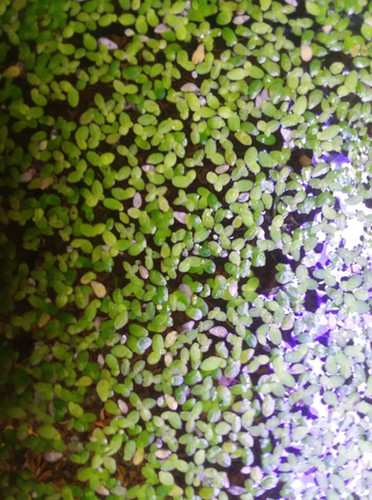
Floating plants solve all of it. They sit at the surface where the light is, they need no substrate, and they cannot be disturbed from below. They also shade the tank, which axolotls appreciate, and they strip nitrate out of the water between changes.
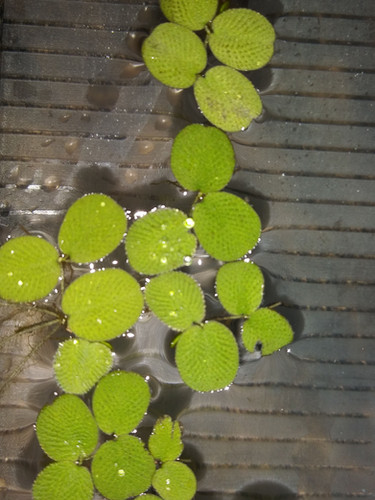
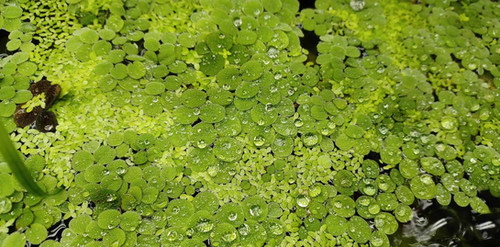
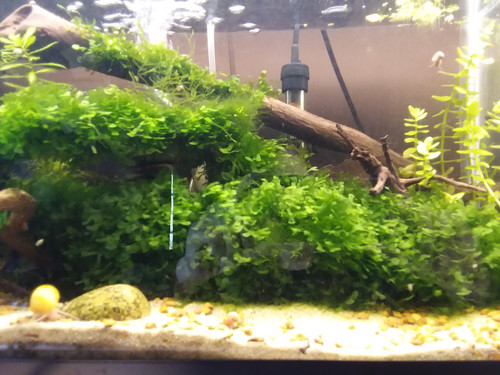
Duckweed, frogbit and water spangles all do this well. Frogbit is the tidiest of the three and the easiest to remove by hand. Duckweed is the fastest growing and, fair warning, close to impossible to get rid of once established. Pellia moss sits on the bottom or ties to hardscape and tolerates cold and shade better than almost anything else.
Indian almond leaves
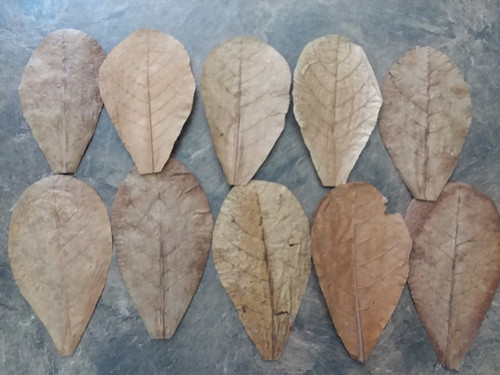
Not a plant, but it belongs here. Indian almond leaves release tannins as they break down, which lightly stains the water, gently lowers pH and has mild antibacterial properties. Many keepers use them as a low intervention way of supporting an animal that is off colour, and axolotls often choose to sit under them.
What to expect on arrival
Live plants may arrive with snails or small amounts of other species mixed in, which is normal for anything grown in an open system. Rinse before adding to your tank. Nothing here needs substrate, fertiliser or CO2.
For the full tank build, see our axolotl tank setup guide.
 Add on