What isopods are for
In a bioactive enclosure, isopods and springtails do the work a filter does in an aquarium. They consume decaying plant matter, shed skin and uneaten food, converting it into something the substrate can use and stopping mould before it starts. Once a colony is established the enclosure largely maintains itself.
They are entirely terrestrial, so to be clear: these do not go in an axolotl tank. They suit terrariums and vivariums for reptiles, amphibians and invertebrates, and plenty of keepers raise them as a display species in their own right.
The species we culture
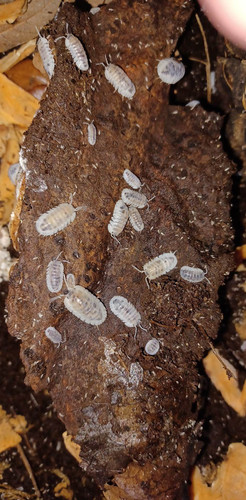
Porcellio laevis, dairy cow. Fast breeding, large and hardy, with bold black and cream patterning. The best starting species and the most productive clean up crew.
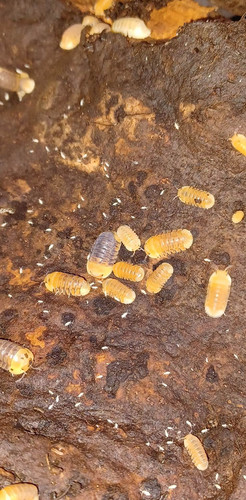
Cubaris, rubber ducky. The collector's species, named for the yellow markings on the head. Slower breeding and more demanding on humidity, which is why they cost more.
Armadillidium vulgare, pennypack. A hardy rolling species that tolerates drier conditions than most, which suits enclosures that are not kept damp.
Nesodillo arcangelii, samurai soldier. Striking patterning and a moderate breeding rate. A good middle ground between the hardy species and the collector ones.
Keeping them
A ventilated tub, a few centimetres of substrate, leaf litter, a piece of cork bark and a damp corner is the whole setup. Feed vegetable scraps and a calcium source such as cuttlebone. Cultures are pulled at random from our master colonies, so counts are approximate and sizes vary.
 Add on